February 5, 2026
If you are trying to keep an older parent safe at home or you’re feeling overwhelmed as a family caregiver, this article is for you.
In Montgomery County, families often start searching for senior home care when a loved one wants to age in place, day-to-day tasks are getting more challenging, or the family is burnt out from trying to care for everything. [2] Patients often hire us right after an illness, hospitalization, or fall, when consistent support and routines are needed for recovery. [5] Whether you live in Silver Spring, Rockville, Bethesda, Gaithersburg, Germantown, Wheaton, Potomac, or nearby, the goal is to help your loved one be safe, supported, and cared for at home.
In this guide, you’ll learn:
- Whether you or your loved one require a home health aide
- What a home health aide can (and can’t) do
- The difference between home health aides and other in-home care providers
- What factors affect home aide costs
- How to choose a home care aide and agency
What is a Home Health Aide?
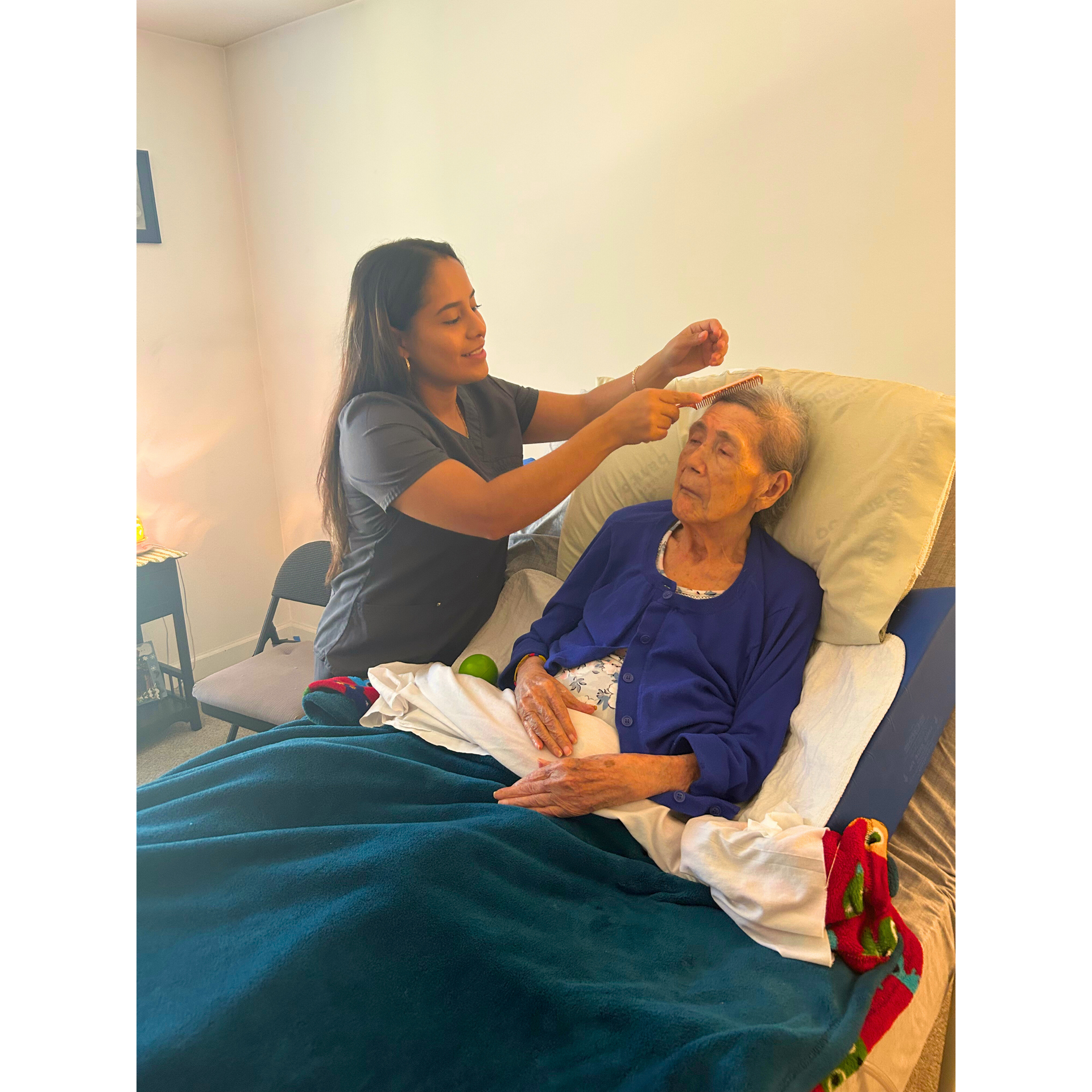
A home health aide is a trained and certified care professional who supports people at home with personal care and daily routines - especially older adults, people living with disabilities, or those with chronic health conditions. [3]
It helps to think of a home health aide as the person who supports all daily tasks for safe care at home: hygiene, safe movement, meals, routine, and dignity. [3]
Home health aides can help with these goals:
- Safety: fewer falls, safer transfers, safer daily routines. [5]
- Hygiene: consistent bathing, grooming, toileting support. [3]
- Nutrition: meal prep, hydration reminders, basic support with eating. [3]
- Mobility support: steadying, walking support, safe positioning (as appropriate). [5]
- Companionship: companion care, regular social connection and caregiver relief (respite). [2]
When families call us, they often compare care options, including:
- Senior home care
- Disabled home care
- Special needs home care
- Alzheimer’s/Dementia home care
A home health aide can be an excellent fit when the main needs are personal care, routine, and safety. Later, we’ll discuss how these may differ from the goals and responsibilities of home nursing or private duty nursing.[1][6]
What a Home Health Aide Can Do For You or Your Loved One Day-to-Day
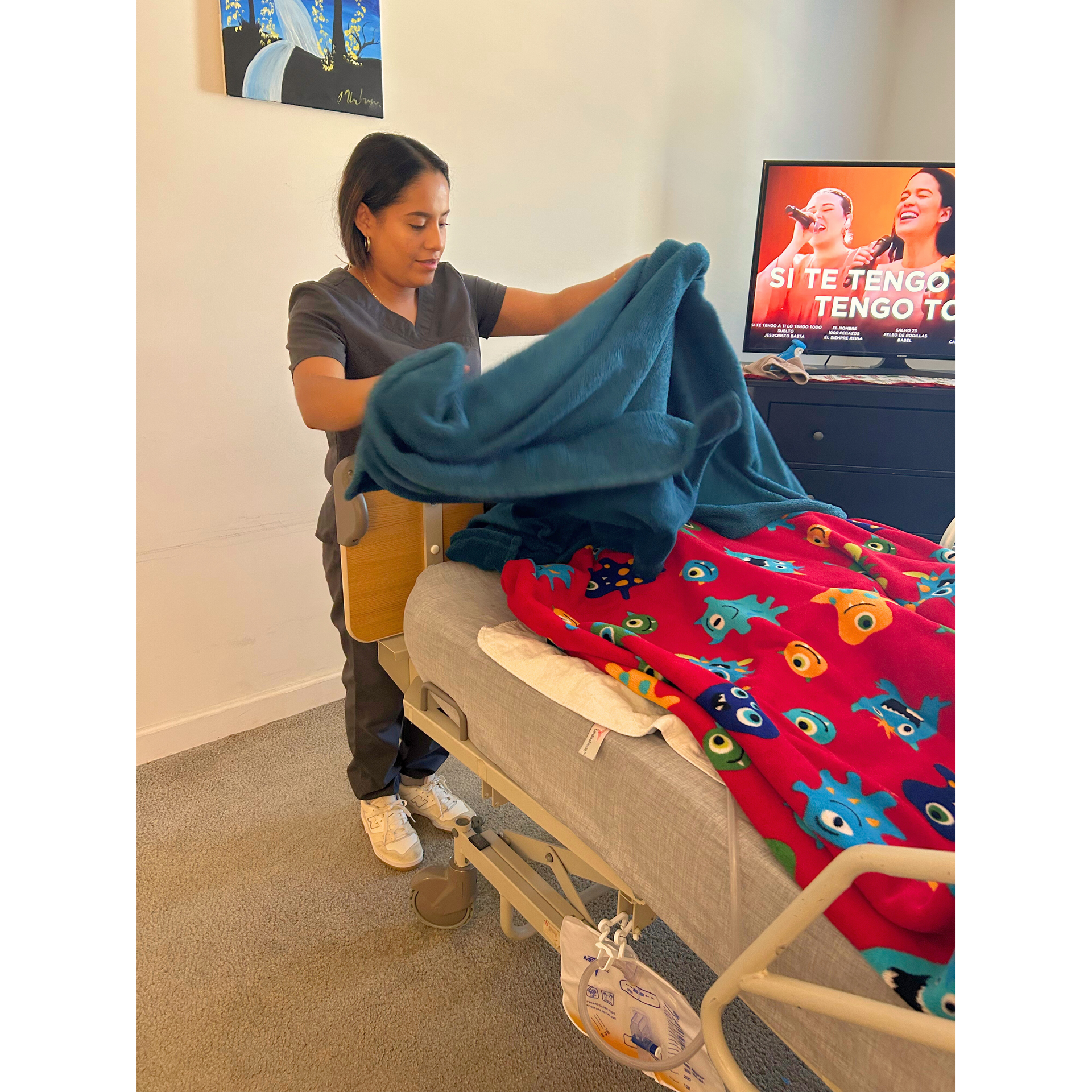
Usually, families hire help when it becomes necessary: bathing becomes unsafe, medication routines get confusing, mobility declines, or the family caregiver can’t keep doing it all. [2] A useful way to understand what a home health aide does is to organize care into 2 categories: Activities of Daily Living (ADLs) and Instrumental Activities of Daily Living (IADLs)
Activities of Daily Living (ADLs)
ADLs are the basic self-care tasks that allow someone to live safely day-to-day. [4] When your loved one’s ADLs become challenging, the risk of falls, infections, and preventable emergencies rises, and families often feel scared or always alert.
Common ADL support from a home health aide includes:
- Bathing and shower assistance: setup, hands-on help as needed, safety monitoring [3]
- Dressing and grooming: clothes selection, buttons/zippers, shaving, oral care [3]
- Toileting and continence care: safe bathroom transfers, hygiene support [3]
- Transferring and positioning: bed-to-chair, chair-to-stand, safe movement [5]
- Eating support: meal setup, cueing, encouragement, basic assistance [3]
- Alzheimer’s care: gentle cueing, routines, sundowning support [8]
Instrumental Activities of Daily Living (IADLs)
IADLs are the “life management” tasks that keep a home running, often the first area where families notice a decline. [4] Many families hire us for 4 hours/week to give light assistance to their loved one with IADLs, helping them stay comfortable and stress-free at home.
A home health aide can help with:
- Meal prep and kitchen cleanup: simple meals, safe reheating, hydration support [3]
- Light housekeeping: laundry, dishes, tidying, changing linens [3]
- Errands and shopping: groceries, household basics, pickup lists [3]
- Appointment support: help getting ready, routine reminders, transportation coordination [3]
This is also where disabled home care and special needs home care become very practical: the goal is to keep life stable with a clean home, meals handled, routines steady. [7]
Goals That Home Health Aides Can Help You and Your Family Accomplish
Mobility + Safety Support
Falls are one of the biggest threats to independence for older adults, and fall prevention is often a major reason families seek senior home care.[5]
Home health aides can help by:
- · Encouraging safe footwear and clear walkways
- · Supporting safer sit-to-stand, lying down, and transfers
- · Noticing changes in balance, strength, or confusion and alerting the family (and healthcare providers) [5]
Even small safety routines, like consistent lighting at night or clearing trip hazards, can reduce risk over time. [5]
Companionship + Caregiver Relief
One of the most underrated benefits of a home health aide is the emotional load it removes from seniors and their families.
Consistent visits can:
- · Reduce isolation and loneliness (especially for seniors living alone) [2]
- · Provide routine and calming structure for dementia home care plans [8]
- · Give family caregivers “off hours” to rest, work, or gain freedom [2]
What Home Health Aides Don’t Do: Scope, Limits, and Common Misunderstandings
When families call us, this is one of their first questions. So you can get a clear picture as to what to expect from a home health aide, here are the commonly requested types of care that other in-home professionals can assist with:
- Home health aides are not a substitute for skilled nursing or therapy.
Home health care can include skilled services like nursing and therapy when ordered and supervised appropriately, but aide services alone focus on personal care and daily living support. [1] [6] - “Medication reminders” aren’t the same as “medication administration.”
An aide may help with medication routines, but who can administer medications depend on the care plan, setting, and applicable requirements. [3][6] When medication management is a major concern (missed doses, confusion, insulin, complex regimens), families often benefit from home nursing involvement. [1] - Wound care and advanced clinical tasks require skilled nursing care.
If your loved one needs clinical wound care, new symptom monitoring, post-op medical oversight, or other skilled services, that typically belongs under skilled home health care with nursing/therapy involvement. [1] [6]
Quick rule of thumb:
- If the primary need is bathing, dressing, toileting, meals, mobility support, and routine, a home health aide is often a great fit.[3]
- If the primary need is clinical care, consider home nursing/private duty nursing or a coordinated home health care plan.[1][6]
Caregiver vs. Home Health Aide vs. Home Health Care - The Major Differences (And Why It Matters To You)
These terms often get used interchangeably, which confuses families.
Here are the true definitions of each:
- Caregiver / Home care aide (often “non-medical”): Focuses on companionship, IADLs (meals, housekeeping, errands), and ADL help depending on training and agency model.[9]
- Home health aide (HHA): A trained aide role that supports ADLs/IADLs and may provide additional health-related supports under clinical direction, depending on the care plan and setting.[3][6]
- Home health care: A broader category that may include skilled services (nursing, therapy) plus aide services, depending on eligibility and orders.[1][6]
Knowing these differences can help you determine who to contact for your loved one's care. When families compare a home health care agency to private hires, they’re usually weighing reliability, backup coverage, supervision, and care coordination - not just price.[2]
Who Benefits Most (and When to Hire a Caregiver Agency)
Many families wait until they’re in crisis. If any of the scenarios below sound familiar, it may be time to explore senior home care.
“If XYZ happens, then this is what I’ll do…” situations:
- After a fall, hospitalization, or rehab discharge → consider short-term support to stabilize routines and reduce readmission risk.[5]
- Alzheimer’s or dementia (wandering risk, hygiene refusal, disrupted routines) → Alzheimer’s home care and dementia home care often work best with consistent structure and trained support.[8]
- Difficulty bathing, toileting, or transferring → ADL support prevents accidents and preserves dignity.[4]
- Meals are inconsistent or unsafe → IADL support can restore nutrition and hydration routines.[9]
- Family caregiver burnout → respite and consistent help improves sustainability.[2]
Mini Self-Checklist: Do We Need Help Now?
Evaluate you or your loved one's situation, and answer “yes,” "no" or “not sure” to these questions:
- Has your loved one fallen or nearly fallen in the last 6 months?[5]
- Are bathing or toileting routines being skipped?
- Are there noticeable hygiene concerns (odor, skin irritation, dirty clothing)?
- Are meals being missed, repeated, or unsafe to prepare?
- Is the home becoming cluttered or increasingly hard to maintain?
- Are medications being forgotten or doubled (even occasionally)?
- Are you worried about wandering, confusion, or unsafe decisions?[8]
- Are you (or another caregiver) losing sleep to “check in” constantly?
- Do you feel anxious leaving them alone for even short periods?
- Have you started canceling work, travel, or family time to cover care?
If you said "yes" to 2–3 or more, it’s reasonable to start seeking care. We at Specialty Care Services offer a complimentary initial phone call, where we can under you and your loved one's needs, preferences, expectations, and determine what would be best.
How to Choose the Right Home Health Care Agency in Montgomery County (Clear Checklist)
The best local agency doesn’t just “send someone.” It should reduce risk, improve consistency, and communicate clearly.
Questions to Ask (copy/paste)
- How do you match caregivers to clients (experience, language, personality, dementia experience)?
- What training and supervision do aides receive? (especially for Alzheimer’s home care, dementia home care, transfers, fall prevention)[5][8]
- Do you provide backup coverage if an aide is sick or unavailable?
- How is the care plan created and updated? (who assesses, how often, family involvement)
- How do you communicate with families (weekly updates, app, phone, care notes)?
- What screening do you use (background checks, references, ongoing evaluations)?
- Are you insured and compliant with required standards for your services?
- How do you handle escalation if needs increase (adding home nursing, coordinating skilled home health care, or private duty nursing when appropriate)?[1][6]
Red Flags
- No written care plan or unclear scope of services
- No backup staffing plan
- Vague answers about supervision, training, or family communication
- A “one-size-fits-all” approach that ignores ADLs/IADLs and safety risks
Frequently Asked Questions (FAQ)
1) How quickly can in-home care start in Montgomery County?
In many cases, services can begin quickly once scheduling and an initial assessment are completed—but start times depend on the level of care needed, preferred hours, and caregiver availability. If safety is an immediate concern (falls, wandering risk, unsafe bathing), tell the agency directly so the plan can prioritize risk reduction.
2) Can you coordinate care if I live out of state (long-distance caregiving)?
Yes—many families manage senior home care from another state by using a clear communication cadence (weekly updates, shared notes, scheduled check-ins) and assigning one primary family contact. If multiple relatives are involved, ask the agency to define one decision-maker to avoid mixed messages and delays.
3) What should we prepare before the first visit to make care smoother?
Have these ready: emergency contacts, medication list (even if aides won’t administer), physician info, a simple daily routine, mobility notes (walker, transfer needs), dietary preferences, and any home safety concerns (stairs, loose rugs, bathroom layout). A strong start prevents misunderstandings and improves caregiver matching.
Why Families Choose Specialty Care Services
The right home health aide can make the difference between “barely getting by” and having a safe, stable routine at home.[3][5] If your family needs senior home care, Alzheimer’s home care, dementia home care, disabled home care, special needs home care, or you’re unsure whether you need aide support vs. home nursing or private duty nursing, we can help you map the best next step.[1][8]
Call to schedule a free phone consult or in-home assessment for Montgomery County, MD—serving Silver Spring, Rockville, Bethesda, Gaithersburg, Germantown, Wheaton, Potomac, and surrounding areas.
References
- National Institute on Aging (NIA). Services for Older Adults Living at Home.
https://www.nia.nih.gov/health/caregiving/services-older-adults-living-home
Accessed January 2026. - National Institute on Aging (NIA). Aging in Place: Growing Older at Home.
https://www.nia.nih.gov/health/aging-place/aging-place-growing-older-home
Accessed January 2026. - U.S. Bureau of Labor Statistics. Occupational Outlook Handbook: Home Health and Personal Care Aides.
https://www.bls.gov/ooh/healthcare/home-health-aides-and-personal-care-aides.htm
Accessed January 2026. - Cleveland Clinic. Activities of Daily Living (ADLs) and Instrumental Activities of Daily Living (IADLs).
https://my.clevelandclinic.org/health/articles/activities-of-daily-living-adls
Accessed January 2026. - Centers for Disease Control and Prevention (CDC). About Older Adult Fall Prevention.
https://www.cdc.gov/falls/about/index.html
Accessed January 2026. - Medicare.gov. Home Health Services Coverage.
https://www.medicare.gov/coverage/home-health-services
Accessed January 2026. - Montgomery County Government (MD). Home Care / In Home Aide Services (IHAS).
https://www.montgomerycountymd.gov/HHS-Program/ADS/ADSHomeCare-Aide-IHAS-p181.html
Accessed January 2026. - Alzheimer’s Association. In-Home Care (Alzheimer’s & Dementia Care Options).
https://www.alz.org/help-support/caregiving/care-options/in-home-care
Accessed January 2026. - MedlinePlus. Home Care Services.
https://medlineplus.gov/homecareservices.html
Accessed January 2026. - Maryland Department of Human Services. In-Home Aides.
https://dhs.maryland.gov/office-of-adult-services/in-home-aides/
Accessed January 2026.